
Melasma in Midlife: Why It Shows Up and Why It’s So Hard to Treat
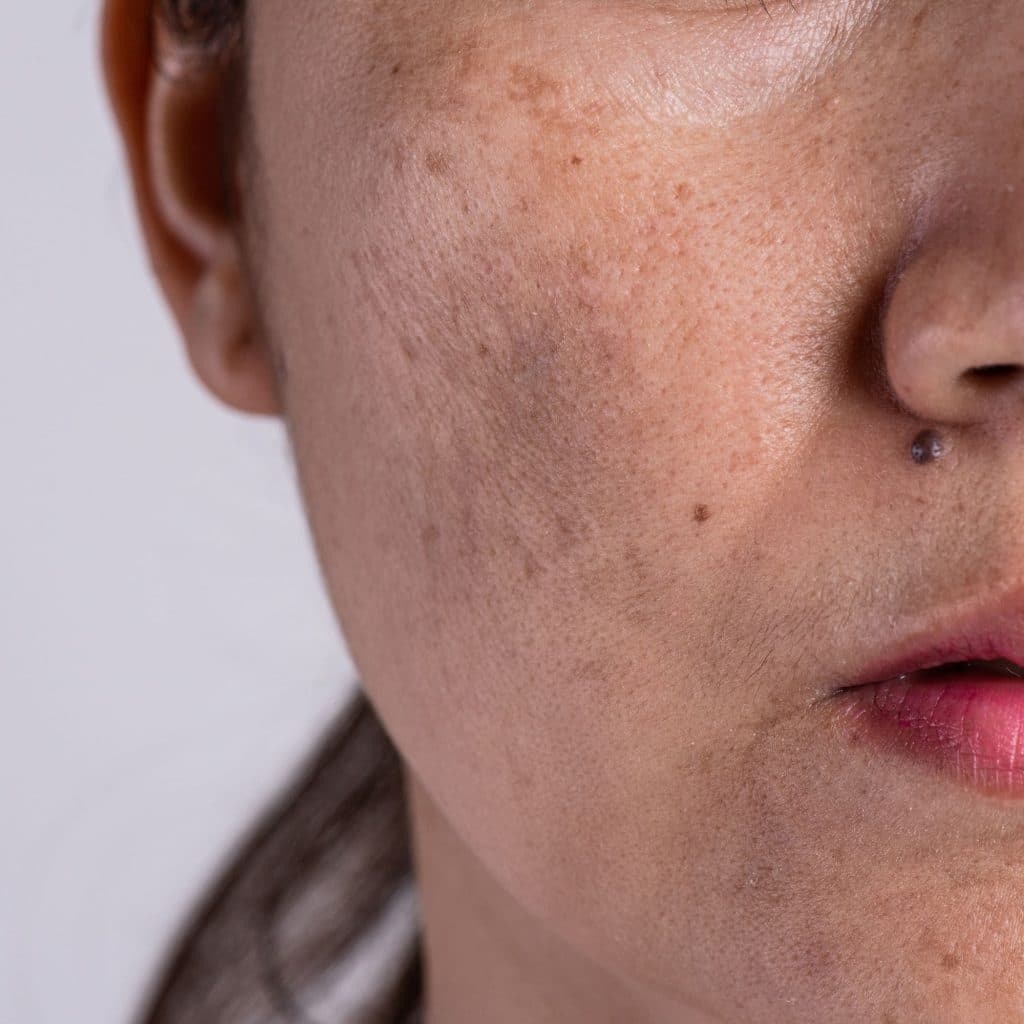
Melasma tends to arrive quietly, as a faint brownish shadow across the cheeks or upper lip that many women barely notice at first or mistake for something else, and then it seems to deepen every time the weather warms up. For many, perimenopause is when it appears for the first time or returns after years of staying quiet, and it has a reputation for being one of the most frustrating pigment concerns to treat. In this post I’ll walk you through what melasma actually is, what it looks like, why midlife makes it harder to treat, and what tends to help, along with a few products I would look into.
What is melasma?
Melasma is a common form of hyperpigmentation that shows up as patches of brown or gray-brown color, usually on the face. It happens when the pigment-producing cells, called melanocytes, in your skin become overactive and keep making extra melanin. Triggers are a combination of hormones, UV and visible light, heat, and genetics. It is far more common in women than in men, and it is more common in medium to deeper skin tones, although it can show up in any skin tone.
Melasma is not harmful and it is not a sign that something is wrong with your health, but it can feel deeply frustrating to look in the mirror and see a patch of color that does not respond the way other spots do. Part of the reason is that melasma is more than a surface issue, since research suggests that inflammation and the small blood vessels in the skin may play a role as well.
What does melasma look like?
Melasma typically appears as flat, uneven patches that look tan, brown, or sometimes slightly gray, with soft or irregular edges. It is usually symmetrical, so you will often see a similar pattern on each side of the face. The most common spots are the cheeks, forehead, upper lip, nose, and chin. It does not itch, it does not feel different from the skin around it, and it is not raised.
It can be easy to confuse with other kinds of pigment. Sun spots tend to be smaller, rounder, and more clearly defined, while post-inflammatory hyperpigmentation follows a breakout, a rash, or an injury and tends to sit exactly where the irritation was. Melasma is broader and more patchy, and it often looks darker in summer and a little softer in winter.
Does melasma show up more in midlife?
Melasma is most often seen in women in their 30s and 40s, and perimenopause lands right in that window, so it is very common at this stage even though not everyone will develop it. What changes in midlife is that several of the triggers pile up at once. Estrogen and progesterone are fluctuating instead of following their usual rhythm, some women are using hormone therapy or hormonal birth control that can influence pigment, lessening oil production and collagen decline makes skin thinner and more sensitive to heat and light, and decades of accumulated sun exposure have already primed the pigment cells to overreact.
If you have noticed new patches after starting a hormonal medication, that is worth bringing up with your prescriber.
Why melasma is harder to treat in midlife
One of the biggest reasons is that the main internal driver, your hormones, is not steady during midlife, so even when a treatment fades the pigment, a new swing can bring it right back. On top of that, midlife skin turns over more slowly, which means pigment tends to linger longer than it did in your 20s or 30s. Cool.
A lot of us also have years of sun damage sitting underneath, so melasma is often layered on top of other pigment instead of being the only thing going on.
The other piece is that midlife skin is usually thinner, drier, and quicker to get irritated, and irritation is one of the things that can make melasma worse. That is why aggressive treatments can backfire, and why the gentle, barrier-friendly approach I talk about in my barrier health post matters so much here. Even with the right plan, melasma has a high tendency to return, so the realistic goal is to lighten it and keep it calm over time, rather than to erase it once and for all.
How to treat melasma
Start with daily sunscreen, no exceptions. Sunscreen is the one non-negotiable in everything I recommend, and with melasma it is the foundation of any plan that works. Visible light, not only UV, can darken melasma, and tinted sunscreens containing iron oxides help block it, so a tinted mineral formula can be a smart choice. However, if you apply skin tints or foundation after your sunscreen, you’re getting the same protection against visible light as you do with a tinted sunscreen. The reason is the iron oxides that give tinted sunscreens their tint are the same irons oxides used in skin tints and foundations to give them their tint. So, if you’d rather wear a non-tinted or chemical sunscreen, that’s fine, but a tinted sunscreen or foundation over any sunscreen offers extra protection. Wearing any SPF 30+ broad spectrum sunscreen you actually enjoy wearing every day is what’s most important. Reapply during the day, and add a hat when you are outside for a long stretch, because heat can trigger melasma too.
Add gentle pigment-targeting ingredients. Azelaic acid, vitamin C, niacinamide, kojic acid, tranexamic acid, and thiamidol are all ingredients that are commonly used to help calm and fade melasma, and they tend to be better tolerated than harsher options. If you are building a vitamin C routine, my guide to the best vitamin C serums for midlife is a good place to start. Introduce one new product at a time, so that if your skin gets cranky you know which one to blame.
Bring in a retinoid slowly. A retinoid speeds up cell turnover and can help pigment fade, but it can also irritate, so go slowly and buffer it if you need to.
Ask a dermatologist about prescription options. Prescription hydroquinone, combination creams, and oral tranexamic acid are used for stubborn melasma. Ask your doctor about any of these options.
Be careful with in-office treatments. Peels and certain low-energy lasers can help in the right hands, but heat and inflammation can make melasma darker, and that is especially true for deeper skin tones. I would want a provider with real melasma experience, and I cover the options in my in-office treatments post.
Give it time. Most melasma plans take several months to show real change, and the results only last if the sun protection continues.
A few products that can help melasma
These are the types of products I would look into.
- Tinted mineral sunscreen: EltaMD UV Physical Broad Spectrum SPF 41 contains iron oxides for visible light protection.
- Azelaic acid: The Ordinary Azelaic Acid Suspension 10% is an affordable option, and Paula’s Choice 10% Azelaic Acid Booster has a creamier feel. It can help fade some pigment and help calm skin irritation which can trigger or worsen dark patches. Prescription azelaic acid is also available at higher percentages. Ask your doctor.
- Tranexamic acid: ANUA Niacinamide 10 TXA 4 Serumis a topical option for gentle daily use.
- Thiamidol: Eucerin’s Thiamidol Radiant Tone Dual Serum was developed specifically for stubborn pigment.
- Vitamin C: Medik8 C-Tetra Advanced Gel-Serum uses a more gentle form of vitamin C, THD Ascorbate, that can be a good option for those with melasma. See my vitamin C serum roundup for midlife-friendly picks.
- Retinol: CeraVe Resurfacing Retinol Serum contains an encapsulated retinol which releases retinol more slowly into your skin, which can decrease irritation.
When to see a dermatologist
Any dark patch that is new, changing, asymmetrical, raised, or has an irregular border should be looked at by a dermatologist to rule out something more serious, because melasma is flat and symmetrical and anything that does not fit that pattern deserves a professional opinion. A dermatologist is also the right person to see when over-the-counter products have not made a difference after a few months, since prescription options can change the picture.
The takeaway
Melasma in midlife is common, it has real hormonal and sun-related causes, and it is stubborn mostly because several triggers overlap at the same time. The approach that works for most of us is consistent sun protection, gentle pigment-targeting ingredients, patience, and medical support when you need it.
Up next, I’ll be talking about under-eye concerns in perimenopause, including crepiness, hollowing, and dark circles, so keep an eye out for that one.
This post is for educational purposes and is not medical advice. Please talk with a dermatologist about your individual skin.
This post contains affiliate links, which means I may earn a small commission if you purchase through them, at no extra cost to you. As an Amazon Associate, I earn from qualifying purchases.
FAQs
Can melasma be cured?
Melasma can usually be improved and managed, but it is not considered curable because it has a strong tendency to come back. Daily sun protection and a maintenance routine are what keep the results in place after the pigment fades.
Does melasma go away after menopause?
Some women notice that melasma settles once their hormones become more stable, but that is not guaranteed. Sun and heat can keep the pigment active, so protection stays important after menopause as well.
Is melasma the same as sun spots?
No. Sun spots are usually smaller, rounder, and more clearly outlined, while melasma appears as broader, symmetrical patches, often across the cheeks, forehead, and upper lip. The two can exist together, which is one reason a dermatologist can be helpful.
Can hormone therapy or birth control cause melasma?
Hormones are a well-recognized trigger, and some women notice melasma after starting hormonal medications. If you are concerned, talk with your prescriber before making any changes.
Can I use vitamin C and retinol if I have melasma?
Many people can, and both are commonly used for pigment. Introduce them one at a time and increase slowly, since irritation can make melasma worse.
Do lasers and microneedling help melasma?
Certain low-energy treatments can help in experienced hands, but heat and inflammation can also darken melasma. It is worth seeing a provider who has real experience treating melasma, especially if you have a medium to deeper skin tone.
Do I really need sunscreen if I am mostly indoors?
Yes, because UVA and visible light can reach you through windows and from indoor light sources. A tinted sunscreen worn daily gives the most consistent protection.


